Materials
How to tell real silk from imitation
The Journal · October 31, 2026 · 3 min read

Real silk warms in the hand, shifts colour as it moves and burns like hair, not plastic. Five checks, and the one label worth asking for in India.
The short answer: real silk feels warm within seconds of being held, its sheen changes colour as the cloth moves, and a loose thread burns slowly with the smell of singed hair and leaves ash you can crush. Polyester stays cool and slippery, shines the same white from every angle, and melts into a hard bead.
No single test is proof. Used together, these five will catch most imitations before you pay.
1. Hold it
Silk is a protein fibre, spun by the silkworm as a continuous filament. Close your hand around the cloth for a few seconds. Silk takes up the warmth of your skin almost at once. Polyester satin stays cool and has a faintly slick, plastic feel however long you hold it.
Now scrunch a corner and let go. Silk creases softly and the creases relax. Many synthetics spring back with no mark at all, and that perfect recovery is itself a warning.
2. Watch the light
Turn the cloth under a lamp. Silk's lustre is deep and uneven: the surface seems to change shade as the angle changes. Synthetic satins reflect a flat, bright white glare that looks the same wherever you stand.
3. Look at the weave and the edge
Hand-woven and hand-printed silk carries small irregularities: a slub in the yarn, a print that sits a hair off at the border. A cloth that is flawless across its whole length was almost certainly made by machine, which does not make it fake, but should make you look harder at the price. On a scarf, check the hem. A hand-rolled edge is plump and slightly uneven; a machined hem is flat.
4. The burn test, and its limits
If the seller agrees, draw one or two loose threads from an inside seam and hold them to a flame with tweezers.
- Silk burns slowly, tends to go out when the flame is taken away, smells like burnt hair and leaves a dark ash that crushes to powder.
- Polyester and nylon shrink from the flame, melt, smell of plastic and leave a hard bead.
- Viscose, often sold as "art silk", burns quickly like paper and leaves a soft grey ash.
The test fails on blends. A silk and viscose mix can smell of both and tell you little. It also damages the piece, so it is not something to do to a finished scarf you do not own.
5. Ask for the Silk Mark
In India, the Silk Mark is a quality label run by the Silk Mark Organisation of India, which was set up by the Central Silk Board under the Ministry of Textiles. It certifies that the piece carrying it is pure natural silk. Each label has a hologram and a unique number that traces back to the registered seller.
Two cautions. The scheme is voluntary, so a missing label does not mean a piece is not silk. And hang tags have been reused on other goods, which is why a sewn-in label is the stronger sign on scarves and stoles.
What price can tell you
Silk is expensive to produce. A "pure silk" square offered for the price of a cotton one is not a bargain; it is a different fibre. The weight helps here too: ask for the momme, the unit silk is sold by.
Our own silks are listed with their fibre and size on each page, starting with the silk twill scarf, and the full range is under scarves and stoles.
Sources and further reading
- Silk Mark, on the scheme, its hologram label and its voluntary status.
- Silk Mark Organisation of India, Vikaspedia, on who runs it.
- silk
- buying guide
Pieces in this story
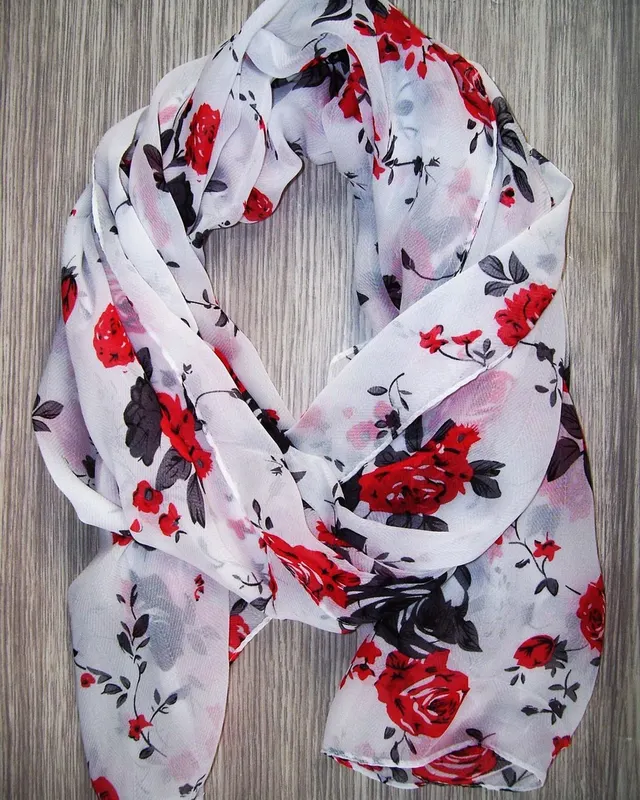 New

More from the journal
- Materials
October 25, 2026 · 2 min read
Cashmere and pashmina: what the two words mean
Both are the soft undercoat of a goat. Cashmere is defined by how fine the fibre is; Kashmir Pashmina is defined by where and how it is made.
Read more - Materials
October 19, 2026 · 2 min read
Momme: how silk is weighed
Silk is sold by weight, not thread count. One momme is about 4.34 grams per square metre, and the number tells you how a scarf will drape.
Read more - Materials
October 15, 2026 · 1 min read
A year of silk in Varanasi
From mulberry cocoons to twill on the loom: a season with the weavers who make our silk.
Read more


